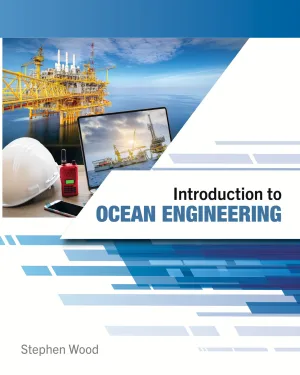
Introduction to Ocean Engineering takes readers on an exciting journey into one of the world's most dynamic and multidisciplinary engineering fields. From the physics of ocean waves and the fundamentals of naval architecture to cutting-edge underwater robotics, offshore renewable energy, underwater acoustics, and intelligent marine systems, this comprehensive textbook provides the knowledge and engineering principles needed to understand, design, and operate technologies in the marine environment.
Written for undergraduate students, graduate students, educators, and practicing engineers, the book combines essential scientific concepts with real-world engineering applications. Readers will explore coastal engineering, offshore structures, ship design, marine materials, ocean instrumentation, aquaculture engineering, underwater archaeology, corrosion control, biofouling management, and the design of advanced underwater vehicles and pressure housings. Throughout the text, practical examples, engineering calculations, case studies, design projects, and review questions reinforce key concepts and prepare students for professional practice.
As ocean resources become increasingly important for energy, transportation, environmental stewardship, national security, and scientific discovery, ocean engineers are playing a vital role in addressing many of the world's greatest challenges. This book introduces the technologies shaping the future of the oceans-including autonomous underwater vehicles, artificial intelligence, advanced sensing systems, renewable ocean energy, and smart engineering solutions.
Whether used as a first course in ocean engineering or as a professional reference, Introduction to Ocean Engineering provides readers with a strong technical foundation while inspiring the next generation of engineers to explore, protect, and responsibly utilize Earth's last great frontier-the oceans.